What Is the Famous Safety Shoes Supplier in Russia?
Industrial safety footwear is a critical part of personal protective equipment (PPE) across Russia’s construction, oil and gas, mining, manufacturing, transportation, and logistics sectors. Buyers searching for the most famous safety shoes supplier in Russia often expect a single answer, but the reality is more nuanced. Russia has several well-established domestic manufacturers alongside international brands that have supplied the market for years.
The right supplier depends on your industry, required safety standards, climate conditions, order volume, and distribution network rather than brand recognition alone.
Quick Answer
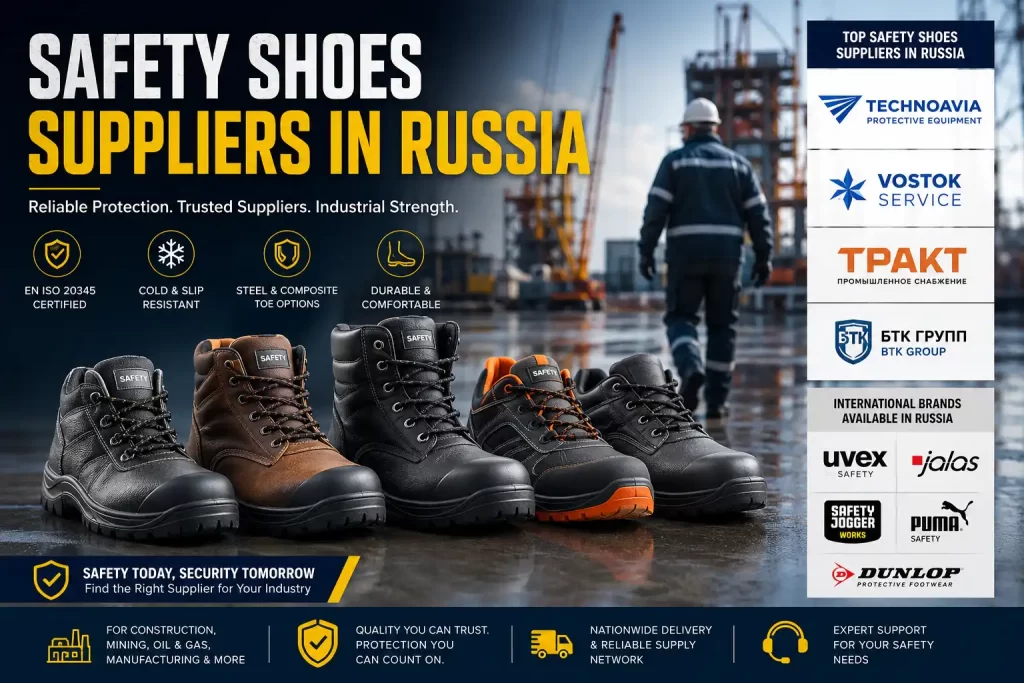
Several companies are widely recognized as leading safety shoes suppliers in Russia. Among domestic manufacturers, Technoavia, Vostok-Service, Tract (Trakt), and BTK Group are among the best-known suppliers because they offer complete PPE solutions, including industrial footwear. International brands such as Uvex Safety, JALAS, Safety Jogger, Puma Safety, and Dunlop Protective Footwear have also established strong reputations in Russia through distributors and corporate procurement channels. The best supplier ultimately depends on the workplace hazards, certification requirements, climate, and purchasing needs.
Key Takeaways
- Russia has several major domestic PPE suppliers that manufacture or distribute safety footwear.
- Technoavia and Vostok-Service are among the most recognized names in the Russian PPE market.
- International brands remain popular for premium industrial footwear where available.
- Russian industries often require footwear suitable for extreme cold and demanding environments.
- Compliance with applicable technical regulations and safety standards is more important than brand popularity alone.
- Buyers should evaluate durability, certification, comfort, after-sales support, and supply capacity.
- Different industries require different footwear features, from chemical resistance to electrical insulation.
Table of Contents
- Why Safety Footwear Matters
- Understanding the Russian Safety Footwear Market
- Famous Safety Shoes Suppliers in Russia
- Leading International Brands Available in Russia
- Comparison Table
- How to Choose the Right Supplier
- Important Safety Standards
- Industry-Specific Recommendations
- Buying Checklist
- Common Buying Mistakes
- Expert Tips
- Summary
- FAQ
- Call to Action
Why Safety Footwear Matters
Safety shoes are designed to reduce workplace injuries caused by falling objects, punctures, slips, electrical hazards, chemicals, and harsh weather. In Russia, these risks are especially significant because many industrial sites operate in challenging environments, including Arctic regions, offshore facilities, mines, and heavy manufacturing plants.
A quality safety boot protects workers while improving comfort during long shifts. Comfortable footwear can also reduce fatigue, helping employees maintain productivity throughout the workday.
Understanding the Russian Safety Footwear Market
Russia has one of the largest industrial sectors in Europe and Eurasia. Demand for safety footwear comes from:
- Oil and gas
- Mining
- Metallurgy
- Construction
- Manufacturing
- Forestry
- Agriculture
- Transportation
- Energy production
- Warehousing
Because of Russia’s diverse climate, manufacturers often produce specialized footwear for:
- Extremely low temperatures
- Snow and ice
- Wet environments
- Chemical exposure
- Electrical work
- Heavy mechanical industries
Unlike warmer markets, insulation and cold-weather performance are major purchasing factors.
Famous Safety Shoes Suppliers in Russia
1. Technoavia
Technoavia is one of Russia’s best-known personal protective equipment suppliers. The company offers a broad portfolio that includes safety footwear, protective clothing, helmets, gloves, respiratory protection, and fall protection equipment.
Its footwear range includes:
- Winter safety boots
- Leather safety shoes
- Composite toe footwear
- Steel toe boots
- Waterproof models
- Anti-slip footwear
Many industrial companies prefer Technoavia because it can supply complete PPE packages rather than footwear alone.
Strengths
- Large product selection
- Nationwide distribution
- Industry-specific solutions
- Corporate procurement experience
2. Vostok-Service
Vostok-Service has long been recognized as one of Russia’s largest PPE suppliers. The company serves industries including construction, manufacturing, mining, logistics, and energy.
Its footwear collection typically includes:
- Safety boots
- Industrial shoes
- Anti-static footwear
- Oil-resistant footwear
- Heat-resistant models
- Winter protective boots
One advantage is its extensive dealer network across Russia and neighboring countries.
3. Tract (Trakt)
Tract is another established PPE supplier serving industrial customers throughout Russia.
The company provides:
- Protective footwear
- Industrial clothing
- Gloves
- Eye protection
- Hearing protection
- Workplace safety solutions
Many medium-sized manufacturers source PPE through Tract because of its broad catalog and procurement services.
4. BTK Group
BTK Group is primarily known for protective clothing and uniforms but also participates in industrial safety equipment, including footwear for specialized sectors.
The company supplies products for:
- Government organizations
- Industrial companies
- Transportation
- Energy
- Large corporate clients
Leading International Safety Shoe Brands Available in Russia
International manufacturers have earned strong reputations for innovation, comfort, and advanced materials.
These brands are often preferred for premium applications.
Uvex Safety
Known for:
- Lightweight construction
- Composite toe technology
- Ergonomic design
- Advanced slip resistance
Suitable for:
- Electronics
- Automotive
- Manufacturing
- Logistics
JALAS
JALAS has become popular among professionals who prioritize comfort during long work shifts.
Its strengths include:
- Excellent ergonomics
- High-quality leather
- Premium cushioning
- Long product lifespan
Safety Jogger
Safety Jogger offers an extensive product range that balances affordability with practical protection.
Popular features include:
- Steel toe options
- Composite toe models
- Waterproof designs
- Slip-resistant soles
Puma Safety
Puma Safety combines athletic-style footwear with industrial protection.
Workers appreciate:
- Modern appearance
- Lightweight materials
- Comfortable midsoles
- Flexible construction
Dunlop Protective Footwear
Dunlop specializes in protective boots designed for demanding environments.
Common industries include:
- Agriculture
- Food processing
- Chemical plants
- Offshore operations
Comparison Table
| Supplier | Origin | Best For | Product Range | Distribution |
|---|---|---|---|---|
| Technoavia | Russia | Complete PPE solutions | Excellent | Extensive |
| Vostok-Service | Russia | Heavy industry | Excellent | Extensive |
| Tract | Russia | Industrial procurement | Very Good | Wide |
| BTK Group | Russia | Corporate contracts | Good | National |
| Uvex Safety | Germany | Premium industrial footwear | Excellent | Distributor-based |
| JALAS | Sweden | Comfort and ergonomics | Excellent | Distributor-based |
| Safety Jogger | Belgium | Cost-effective PPE | Very Good | International |
| Puma Safety | Germany | Lightweight footwear | Very Good | Distributor-based |
| Dunlop Protective Footwear | Netherlands | Waterproof industrial boots | Excellent | Global |
How to Choose the Right Safety Shoes Supplier
Selecting a supplier involves more than comparing prices.
Evaluate Product Certification
Verify that footwear complies with the safety regulations required by your workplace.
Check:
- Toe protection
- Slip resistance
- Penetration resistance
- Electrical protection
- Chemical resistance
- Heat resistance
Consider Climate
Russia’s climate varies dramatically.
For northern regions, buyers should prioritize:
- Thermal insulation
- Cold-resistant soles
- Waterproof construction
- Moisture management
For indoor manufacturing, lightweight breathable footwear may improve worker comfort.
Review Material Quality
Common materials include:
- Full-grain leather
- Nubuck
- Polyurethane
- Rubber
- Composite materials
- Kevlar midsoles
Each material offers different advantages depending on workplace hazards.
Assess Supply Capacity
Large organizations often require:
- Consistent inventory
- Bulk ordering
- Custom sizing
- Fast replacement orders
Reliable logistics can be just as important as product quality.
Important Safety Standards
Industrial footwear should comply with the applicable safety requirements for the intended market.
Common standards include:
| Standard | Region | Purpose |
|---|---|---|
| EN ISO 20345 | Europe | Personal protective footwear |
| EN ISO 20347 | Europe | Occupational footwear without toe cap |
| ASTM F2413 | United States | Protective footwear performance |
| Technical Regulations of the Eurasian Economic Union (EAEU) | Eurasian market | Product safety requirements |
Always confirm the certifications required by your employer or procurement department before making a purchase.
Industry-Specific Recommendations
Oil and Gas
Look for:
- Anti-static properties
- Slip-resistant soles
- Oil resistance
- Waterproof protection
- Cold insulation
Mining
Recommended features:
- Steel or composite toe
- Metatarsal protection
- Puncture-resistant midsoles
- Abrasion-resistant outsole
Construction
Essential characteristics include:
- Impact resistance
- Comfortable cushioning
- Durable leather
- Slip-resistant outsole
Manufacturing
Workers typically benefit from:
- Lightweight construction
- Breathable materials
- Flexible sole
- Anti-fatigue design
Practical Buying Checklist
Before selecting a supplier, confirm the following:
- Product certifications
- Workplace hazard compatibility
- Size availability
- Replacement policy
- Warranty terms
- Delivery timeline
- Bulk order capability
- Technical support
- Customer service
- Product testing documentation
Using a checklist helps reduce procurement errors and improves long-term value.
Pros and Cons of Domestic vs. International Suppliers
| Factor | Domestic Suppliers | International Brands |
|---|---|---|
| Local distribution | Excellent | Varies |
| Industry knowledge | Strong | Good |
| Product variety | Extensive | Extensive |
| Premium technologies | Moderate | Often higher |
| Corporate support | Strong | Distributor dependent |
| Cold-weather specialization | Excellent | Good |
| Global brand recognition | Lower | Higher |
Common Buying Mistakes
Many purchasing teams focus on initial cost rather than overall performance.
Frequent mistakes include:
- Buying without reviewing certifications
- Ignoring workplace hazards
- Choosing incorrect insulation levels
- Ordering one model for every department
- Overlooking worker comfort
- Skipping wear testing
- Failing to verify replacement availability
These issues can increase replacement costs and reduce worker satisfaction.
Expert Tips
Experienced safety managers often recommend the following practices:
- Test several footwear models before placing a large order.
- Gather feedback from workers after field use.
- Match footwear to specific job roles instead of applying one standard model across the organization.
- Review outsole wear in real working conditions.
- Replace damaged footwear immediately rather than waiting for scheduled procurement cycles.
- Partner with suppliers that provide technical documentation and after-sales support.
- Factor in lifecycle cost, including durability and replacement frequency, instead of focusing solely on the purchase price.
Summary
There is no single company that can universally be called the famous safety shoes supplier in Russia because different industries have different operational requirements. However, Technoavia and Vostok-Service are widely recognized as leading domestic suppliers due to their extensive PPE portfolios, nationwide distribution, and experience serving major industrial sectors. Other established Russian suppliers, including Tract and BTK Group, also play significant roles.
For organizations seeking international brands, Uvex Safety, JALAS, Safety Jogger, Puma Safety, and Dunlop Protective Footwear remain respected choices where available. The best decision should be based on safety compliance, workplace hazards, climate conditions, product quality, supplier reliability, and long-term value rather than brand popularity alone.
Frequently Asked Questions
1. Which is the most famous safety shoes supplier in Russia?
Among domestic companies, Technoavia and Vostok-Service are generally considered the most recognizable names because they supply comprehensive PPE solutions to industries such as construction, mining, manufacturing, logistics, and oil and gas. Their extensive product ranges, broad distribution networks, and long-standing relationships with industrial customers have contributed to their strong market presence. The best choice, however, depends on your industry’s technical requirements and procurement priorities.
2. Are international safety shoe brands available in Russia?
Yes. Depending on distribution channels, trade conditions, and local availability, international brands such as Uvex Safety, JALAS, Safety Jogger, Puma Safety, and Dunlop Protective Footwear can be found through authorized distributors or industrial equipment suppliers. Availability may vary over time, so buyers should verify current supply, warranty support, and certification before placing large orders.
3. What certifications should safety shoes have?
The appropriate certification depends on the market and industry. European products commonly comply with EN ISO 20345, while U.S. products often follow ASTM F2413. Products intended for the Eurasian market may also need to meet applicable Eurasian Economic Union technical regulations. Employers should always confirm the specific compliance requirements for their workplace and local regulations.
4. Which industries use safety footwear the most in Russia?
The largest users include oil and gas, mining, construction, metallurgy, manufacturing, transportation, warehousing, agriculture, forestry, and energy production. Each sector has different risk profiles, so footwear specifications vary. For example, miners may require puncture-resistant soles and metatarsal protection, while food-processing workers may prioritize waterproof and slip-resistant boots.
5. Are composite toe shoes better than steel toe shoes?
Neither option is universally better. Composite toe shoes are lighter, do not conduct electricity, and are often more comfortable in cold environments. Steel toe shoes typically offer excellent impact protection and long-term durability but can be heavier. The right choice depends on workplace hazards, climate, comfort needs, and employer safety requirements.
6. How often should industrial safety shoes be replaced?
Replacement schedules vary according to work conditions, usage, and manufacturer guidance. Footwear should be replaced whenever protective features become compromised, such as damaged toe caps, worn slip-resistant outsoles, torn uppers, or degraded midsoles. Regular inspections help identify problems before they create safety risks.
7. What should companies consider when choosing a safety shoe supplier?
Companies should evaluate product quality, certification, production capacity, delivery reliability, customer service, technical documentation, warranty support, and the supplier’s ability to provide consistent inventory. Conducting wear trials with employees and comparing total ownership costs can also lead to better purchasing decisions than selecting based solely on price.
8. Are winter safety boots different from standard work boots?
Yes. Winter safety boots are specifically designed for cold environments and typically include thermal insulation, moisture-resistant materials, cold-flexible outsoles, and enhanced traction for snow and ice. These features help maintain foot warmth and reduce slip risks while still providing the required impact and compression protection for industrial work.
Call to Action
If you’re selecting a safety shoes supplier for operations in Russia, start by identifying your workplace hazards, required certifications, and environmental conditions. Compare multiple suppliers, request product samples, conduct field testing with end users, and verify compliance documentation before committing to a large purchase. A careful evaluation process helps ensure workers receive footwear that delivers both reliable protection and long-term comfort.